AI event operations in 2026: practical uses from planning to reporting
Where AI can reduce operational load across registration, attendee support, content and post-event analysis.
AI is moving into the event workflow
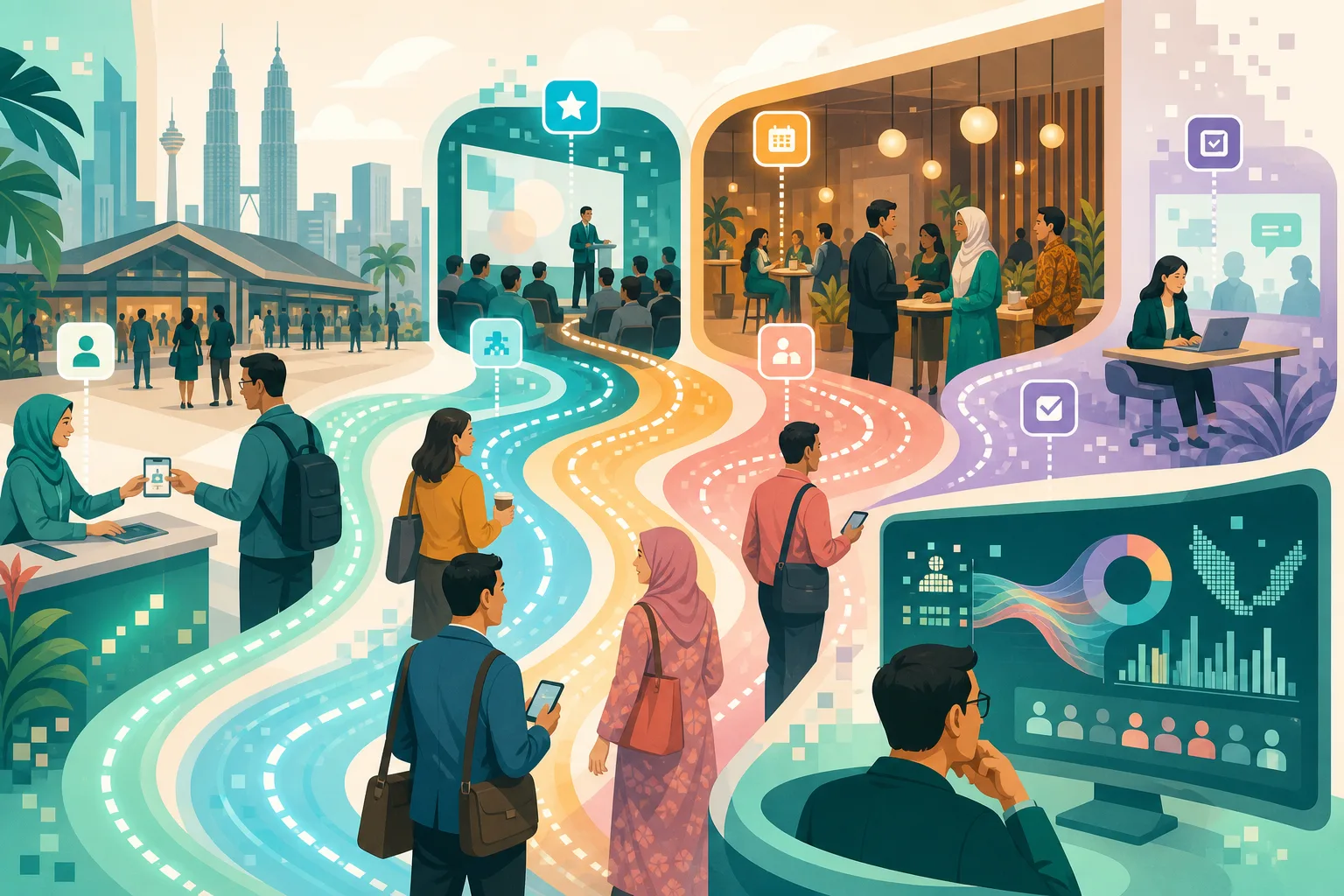
Cvent's 2026 event trends describe a move from experimentation to accountable use, while Malaysia Business Events Week highlights AI, IoT and digital transformation across the event journey. The useful question is no longer whether AI can draft an email. It is where automation can reduce pressure without creating a live operational risk.
Good candidates include supplier research, schedule checks, attendee FAQ support, content repurposing, survey analysis and report preparation.
connect the lifecycle
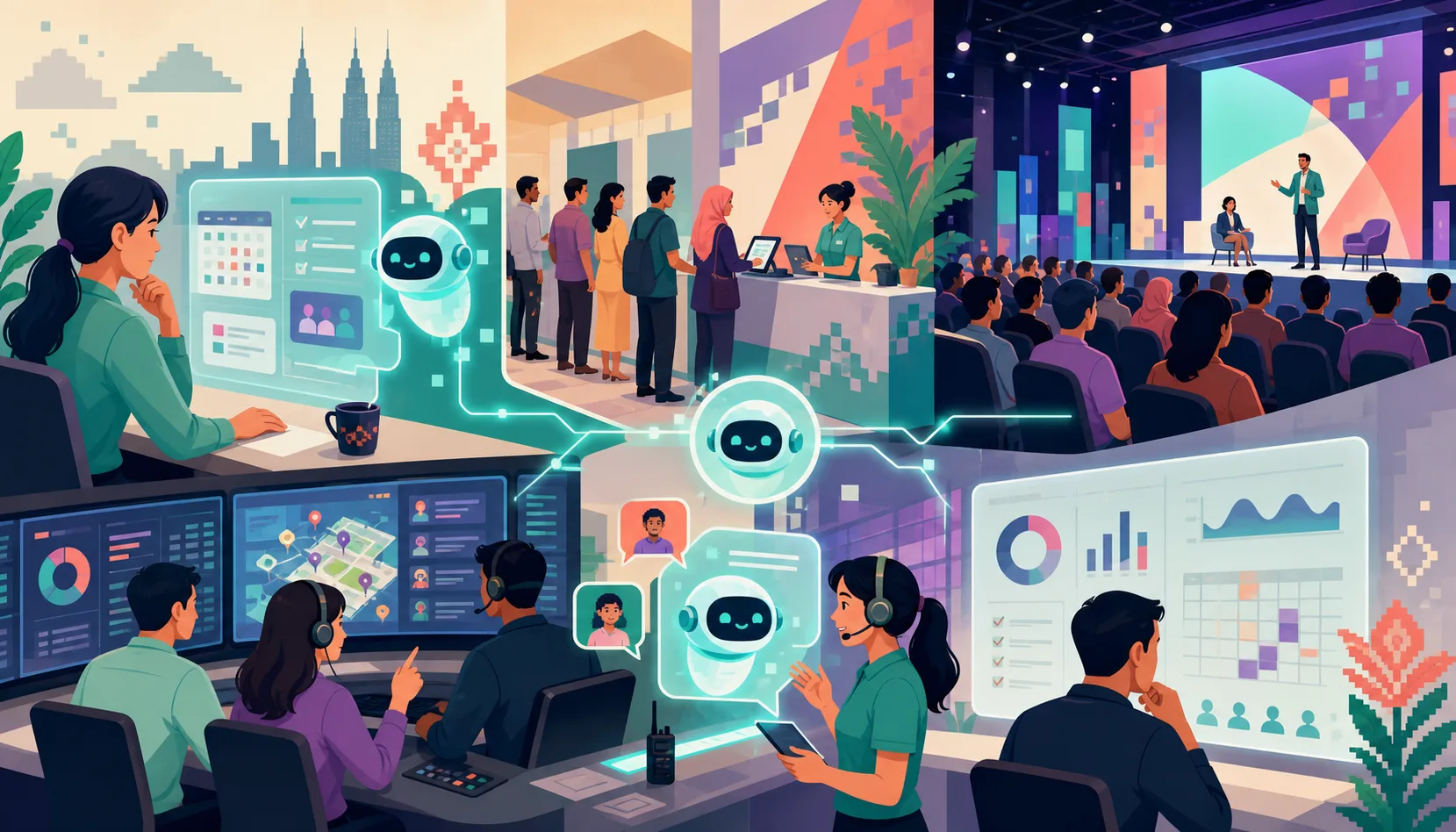
Use one approved event knowledge base for dates, venue instructions, speaker details and policies. Connect registration, communications and session data so changes propagate consistently. A chatbot reading an outdated spreadsheet will respond quickly and still be wrong.
- pre-event: brief checks, content drafts and attendee segmentation
- onsite: FAQ routing, operations summaries and issue triage
- post-event: feedback themes, content clips and outcome reporting
- always: named human owners for safety and public commitments
keep the event human
Events create trust through presence, relevance and shared experience. Automation should give the team more attention for guests, speakers and partners—not replace every interaction with a screen.
Define success before selecting tools. Track reduced handling time, fewer information errors, smoother check-in, relevant session engagement and better follow-up. A visible operational improvement is stronger evidence than an AI feature list.
sources & further reading
make this practical