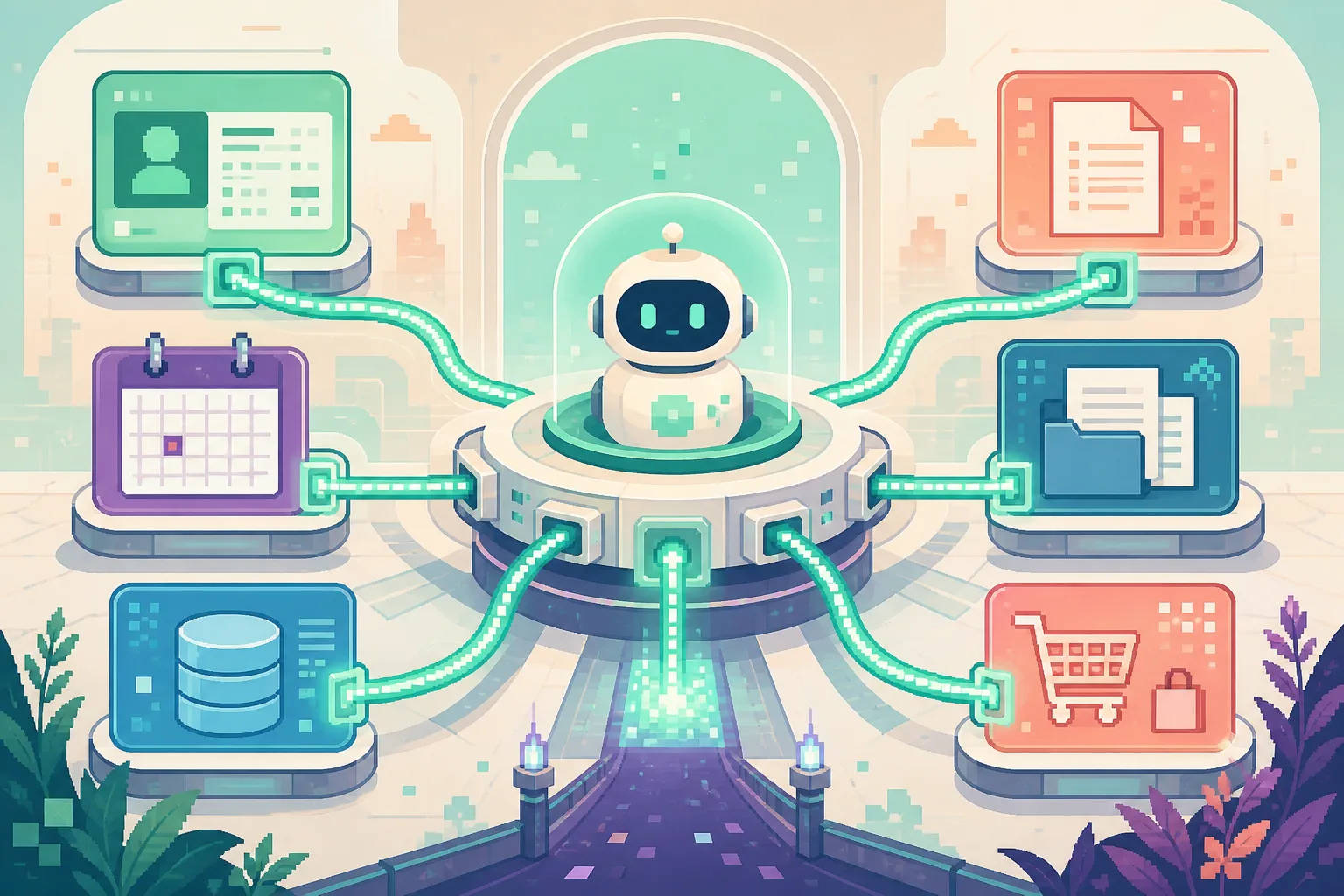
RAG in 2026: turning company knowledge into answers people can verify
How retrieval-augmented generation works, where it fails and what businesses need before launching an internal knowledge assistant.

why retrieval matters
A general model does not know the current state of a company's policies, products or client records. Retrieval-augmented generation searches an approved knowledge collection at question time and supplies relevant material to the model. Google also identifies RAG as part of how generative search features ground answers in fresh web pages.
The pattern can power internal policy assistants, product support, proposal research and service documentation. It does not guarantee correctness; it gives the system better evidence to work from.
fix the knowledge layer
Duplicate files, unexplained abbreviations, stale policies and conflicting versions will surface as poor answers. Establish ownership, lifecycle and access rules before indexing everything. Chunk documents around meaningful sections and preserve metadata such as title, date, owner and confidentiality.
- retrieve only sources the user is allowed to access
- prefer current approved documents over drafts
- return source links with the answer
- measure retrieval quality separately from writing quality
design for uncertainty
The assistant should say when evidence is missing or contradictory. High-impact answers may require a named owner to confirm. Log queries and source selections so recurring knowledge gaps can be fixed at the document level.
A strong RAG system is not a chat box placed over a file dump. It is a managed knowledge product with search quality, permissions, feedback and clear boundaries.
sources & further reading
make this practical